It’s 5:30 PM on a drizzly November Tuesday. You’re on a job site where a backhoe is reversing, the diesel engine is roaring, and the operator’s visibility is narrowed by the rain-streaked glass. In that split second, the only thing standing between a productive workday and a life-altering tragedy is a thin layer of fluorescent fabric. According to industrial safety data, “struck-by” accidents remain a leading cause of workplace fatalities, and most occur because a worker simply wasn’t seen in time.
In my twelve years of managing large-scale home renovations and commercial refurbishments, I’ve seen everything from high-end penthouse flips to gritty basement excavations. If there is one thing I’ve learned, it’s that safety isn’t a “luxury” add-on; it’s the foundation of every successful project. I never step onto a site without my Safety Vest Orange, and I don’t let my crew do it either. It’s not just about following the rules—it’s about ensuring every person goes home to their family at night.
The Science of High-Visibility Logistics
To the uninitiated, a safety vest is just a piece of bright clothing. To a safety professional, it is a piece of precision-engineered equipment designed to manage the logistics of “visual detection.”
When we talk about a Safety Vest Orange, we are dealing with two distinct scientific phenomena: Fluorescence and Retroreflection. Fluorescent materials (the orange fabric) work by absorbing invisible ultraviolet light from the sun and re-emitting it as visible light, making the wearer appear “brighter” than their surroundings even on a gloomy day.
The Beacon in the Fog Analogy
Think of a job site like a crowded, noisy radio frequency. There is a lot of “static”—machinery, piles of lumber, gravel, and shadows. A worker in a gray t-shirt is just more static. A worker wearing a Safety Vest Orange is like a high-powered radio beacon. It cuts through the visual noise and sends a clear signal to the human brain: “Stop. Human here.”
Understanding ANSI Classes: Which Vest Do You Actually Need?
One of the most common mistakes I see beginners make is grabbing the cheapest vest off the rack without looking at the tag. Industrial safety compliance is governed by specific standards, most notably ANSI/ISEA 107.
1. Class 1: Low-Impact Environments
These are for areas where traffic does not exceed 25 mph. Think of a warehouse worker or a parking attendant. They provide basic visibility but aren’t enough for a dynamic construction site.
2. Class 2: The Construction Standard
This is what I consider the “sweet spot” for most home improvement and light industrial work. A Class 2 Safety Vest Orange has more square inches of fluorescent background and significantly more retroreflective tape. It’s designed for workers who are near traffic or heavy machinery moving over 25 mph.
3. Class 3: High-Risk Logistics
If you are working on a highway project at night or in extreme weather with zero visibility, you need Class 3. These often look like jackets with sleeves because the standard requires reflective material on the arms to create a “human silhouette” that drivers can recognize instantly.
Why Orange? The Battle Between Orange and Lime-Yellow
I often get asked, “Should I buy orange or lime-green?” In the industry, we call this the “Contrast Logistics” debate.
-
Lime-Yellow: Generally more “conspicuous” because the human eye is most sensitive to this wavelength. It’s great for urban environments where you need to stand out against gray asphalt.
-
Safety Vest Orange: This is my personal preference for heavy construction and wooded areas. Orange has a historical association with “danger” and “work zones.” More importantly, it provides superior contrast against green foliage or blue-toned backgrounds.
Pro Insight: If you are working in a rural area or a backyard with a lot of greenery, the orange vest will “pop” much more effectively than a green one, which might accidentally blend into the background.
Technical Components of a Professional Safety Vest
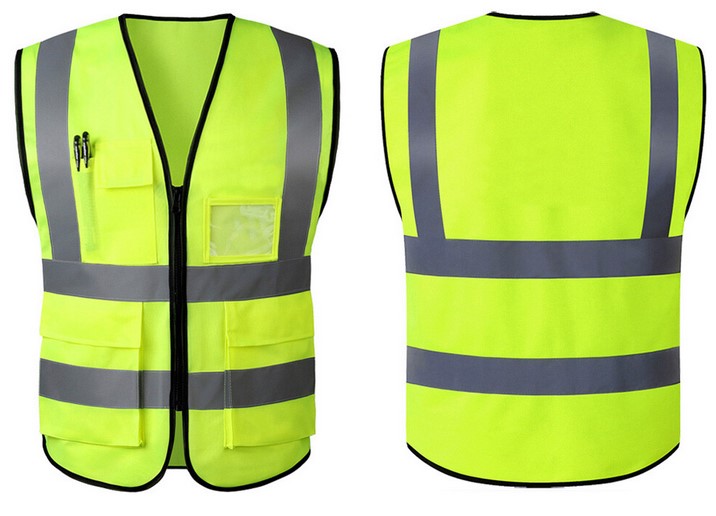
When I’m evaluating a Safety Vest Orange for a new crew member, I look past the color. I look at the construction.
-
Breakaway Points: On a high-risk site, you want a “5-point breakaway” vest. If the vest gets caught in a moving gear or a spinning auger, the Velcro points at the shoulders, sides, and front will snap open, letting the worker escape rather than being pulled into the machine.
-
Mic Tabs and Pockets: For intermediate users, logistics are key. I look for vests with heavy-duty mic tabs for radios and “tablet pockets” that can hold blueprints or a smartphone without sagging.
-
Breathability: We often work in 90-degree heat. A solid polyester vest is a sweat box. I always opt for mesh-back designs that allow for “thermal regulation” while maintaining compliance.
Expert Advice: The “Dirty” Truth About Visibility
A safety vest is only effective if it’s actually bright. I’ve seen guys on site wearing vests so covered in oil, mortar, and dust that they look like brown rags.
Tips Pro: The reflective beads on your vest’s tape are fragile. If you wash your vest with harsh industrial solvents or high heat, you’ll “kill” the reflectivity. Always wash your Safety Vest Orange in cold water on a gentle cycle and hang it to dry. If the silver tape starts to look dull or gray when you shine a flashlight on it, it’s time to throw the vest away. A “dead” vest is just a fashion statement, not safety equipment.
The “Flame Resistant” Trap: Not all orange vests are flame-resistant (FR). If you are doing electrical work or welding, a standard polyester vest is a massive hazard—it will melt to your skin in the event of an arc flash or spark. Always look for the ASTM F1506 or NFPA 70E label if your job involves heat or electricity.
Beyond the Site: Use Cases for the Savvy DIYer
Even if you aren’t a pro, keeping a few Class 2 Safety Vest Orange units in your garage is a smart move for your personal safety logistics:
-
Roadside Emergencies: If you have to change a tire at night, putting on a vest increases your visibility to passing cars by over 300%.
-
Home Roof Repairs: If you’re up on a ladder, a bright vest helps neighbors or family members keep an eye on you in case you take a fall and need help.
-
Lawn Care near Roads: If your property borders a busy street, wearing high-visibility gear while mowing is a non-negotiable safety layer.
Summary: A Culture of Visibility
Industrial safety compliance isn’t about checking a box for an inspector; it’s about managing the “visual landscape” of your workspace. By choosing a high-quality Safety Vest Orange, you are taking control of your personnel’s visibility and significantly reducing the risk of accidental injury.
In my twelve years of experience, I’ve found that the most professional crews are the ones who treat their gear with respect. A clean, bright, and compliant vest is a sign of a team that takes their craft—and their lives—seriously.
Is your current gear up to the ANSI Class 2 standard, or are you still relying on that faded vest from three years ago? Or perhaps you’re wondering which specific mesh material is best for your humid climate? Drop a comment below, and let’s make sure your site is as visible and safe as possible!