
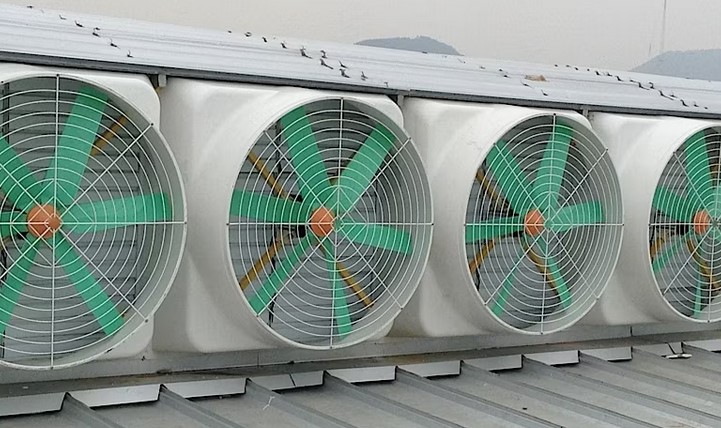
I still remember the call I got at 2:00 AM from a warehouse manager whose facility had gone “dark” in terms of air circulation. The air was thick with manufacturing particulates, and the main ventilation system had simply stopped. When I climbed up to the catwalk to inspect the primary unit, the exhaust fan motor wasn’t just hot—it was glowing. It had been running at 110% capacity for months because of a simple, ignored buildup of grease and dust.
That night cost the company three days of production downtime and a complete motor replacement. In my ten years of facility management and home improvement, I’ve learned that the exhaust fan is the “lungs” of your building. If you don’t take care of the heart—the motor—the entire system is eventually going to suffocate.
Understanding the Engine of Airflow
Think of your exhaust fan motor as the engine of a car. Just like a car engine needs oil, cooling, and clean air filters to run, your fan motor requires a specific set of environmental conditions to perform its job. If you neglect the motor, the internal coils (the “nerves” of the system) start to break down due to thermal fatigue.
When an exhaust fan fails, it’s rarely a sudden explosion. It’s usually a slow, painful degradation caused by friction and heat. By understanding how this component operates, you can stop the breakdown before it starts.
The Anatomy of Motor Failure: Why They Give Up
I’ve torn down hundreds of these motors, and the “autopsy” results are usually the same. If you are a facility manager or a DIY homeowner, you need to watch for these three primary “silent killers”:
-
Bearing Wear: The motor spins on internal bearings. Over time, these lose their lubrication, creating friction that generates extreme heat and eventually “seizes” the motor.
-
Dust Insulation: Dust and grease act like a thick wool blanket wrapped around the motor casing. Since the motor relies on ambient air to cool itself, this blanket keeps all the heat trapped inside, effectively “cooking” the internal windings.
-
Voltage Fluctuation: Motors are designed for specific electrical loads. Frequent power surges or “brownouts” can stress the capacitor, leading to a loss of torque and eventual motor stalling.
Strategic Maintenance Protocol: The Pro Approach
You don’t need to be a certified electrical engineer to perform a high-level inspection. My “Preventative Triage” protocol takes about 15 minutes and can save you thousands in repairs.
1. The Auditory Check (Listen to the Rhythm)
Every motor has a “voice.” A healthy motor should have a smooth, steady hum. If you hear a rhythmic “clicking” or a high-pitched “squeal,” your bearings are starting to fail. If you hear a low, buzzing growl, you might have an electrical load issue or a failing capacitor.
2. Temperature Monitoring
If you can’t touch the motor housing without pulling your hand away, it’s running too hot. An infrared thermometer is one of the best tools I have in my kit.
-
Pro Tip: Keep a log of the temperature during normal operation. If you see a consistent upward trend over several weeks, you know you have an airflow restriction issue that needs immediate attention.
3. Cleaning the Airway
Never use high-pressure water to clean a motor—that’s a shortcut to a short circuit. Use compressed air (at a safe distance) to blow out the cooling fins. If there is heavy grease buildup, use an approved electrical contact cleaner, never a corrosive degreaser.
The Vital Role of the Capacitor
If you ever see a fan that struggles to start but eventually spins up (or just hums until you give it a “nudge”), you are looking at a classic capacitor failure. The capacitor is the “jump-start” device that gives the motor the initial push to overcome inertia.
Checking a capacitor is relatively safe if you know how to discharge it properly. A faulty capacitor is the cheapest part to replace, yet it’s the most common reason people unnecessarily replace the entire motor.
Expert Advice: The “Hidden” Dangers
In my decade of experience, I’ve found that even the most diligent teams make these common mistakes:
Peringatan Tersembunyi (Hidden Warning): Never ignore an “unusual” vibration. In an exhaust system, a vibration usually means the fan blades are misaligned or bent. If the blades are off-balance by even a few grams, that vibration will vibrate the motor shaft until the bearings shatter. Always check your blade balance when you clean the motor.
Tips Pro: When replacing a motor, always look at the “Service Factor” (SF) on the nameplate. A motor with a higher Service Factor is designed to handle occasional overloads and temperature spikes better than a standard-rated motor. Spend the extra money on the higher SF—it’s an insurance policy for your air quality.
Lubrication Logistics
Some industrial motors have “grease ports.” If yours does, don’t just pump grease into it until it oozes out. Over-greasing is just as bad as under-greasing; it causes the bearing to churn the excess grease, which builds up massive heat. Follow the manufacturer’s specifications for the exact number of “shots” from your grease gun.
When to Repair vs. Replace
Sometimes, the most “efficient” choice is letting go.
-
Repair: If the bearings are making noise but the coils are still clean and cool, a bearing swap is highly cost-effective.
-
Replace: If the motor housing shows signs of “varnish” or a burnt-insulation smell (that sharp, acrid odor), the internal windings have been cooked. Once the insulation is gone, the motor is finished—replace it before it causes a fire hazard.
Your exhaust fan motor is the invisible hero of your building. By shifting from a “run-to-failure” mindset to a “strategic maintenance” protocol, you ensure that your air quality remains high and your operational costs remain low.
Don’t wait for the middle-of-the-night emergency call. Start your logbook today, listen to the hum of your motors, and keep those cooling fins clean. A little bit of proactive care goes a long way in ensuring your facility stays breathing properly.
Do you have an exhaust system that is currently running loud or vibrating? I’d be happy to help you diagnose the specific symptoms. Would you like me to guide you through a step-by-step audit checklist for your fan’s current status?
