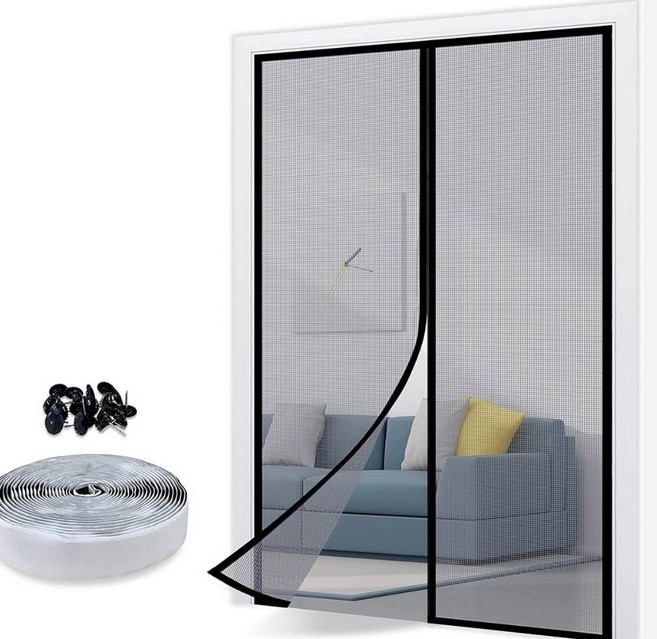
It’s a breezy Saturday afternoon, and you’ve just opened your back door to let that crisp, fresh air circulate through your kitchen. Within five minutes, the dream of a “refreshing breeze” turns into a nightmare: three flies are buzzing around your fruit bowl, a stray mosquito is eyeing your neck, and your air conditioner is working overtime to fight the humidity. You want the air, but you definitely don’t want the guests that come with it.
In my decade of helping homeowners optimize their living spaces, I’ve seen people spend thousands on complex motorized screen systems or clunky, sliding screen doors that jump off their tracks every time the dog looks at them. But the real “insider” secret to high-efficiency ventilation management isn’t a mechanical overhaul; it’s the Magnetic Door Screen. It is a simple, elegant piece of “passive technology” that manages the logistics of your home’s air quality without the structural headache.
The Engineering of Passive Airflow Management
To understand why a Magnetic Door Screen is so effective, you have to look at the physics of natural ventilation. In the home improvement world, we call this the “cross-breeze effect.” For fresh air to move, it needs an entry and an exit. By keeping a door open, you create a low-pressure path that pulls stagnant air out.
The challenge has always been “access management.” How do you keep the path open for air but closed for pests? A traditional screen door is like a rigid wall with a hinge; it requires a hand to open and a hand to close. A magnetic screen, however, operates like a “valve.” It opens under pressure and seals itself using the force of magnetism—no human intervention required.
The Heart-Valve Analogy
Think of a Magnetic Door Screen like a valve in a heart or a high-end engine. It’s designed to allow “traffic” to flow in one direction (you, your kids, your pets) and then immediately snap shut to maintain the integrity of the system (keeping the bugs out). It doesn’t stay “open” or “closed”—it stays “functional.”
Material Science: Choosing the Right Mesh Logistics
Not all screens are created equal. When I’m advising a client on a Magnetic Door Screen, I tell them to ignore the pretty packaging and look at the “mesh density” and “magnet count.”
-
Polyester vs. Fiberglass: Most budget screens use thin polyester. In my experience, if you have a dog or a cat, polyester is a waste of money; it will be shredded in a week. Look for heavy-duty fiberglass mesh. It’s more durable, fire-resistant, and provides better visibility.
-
Magnet Polarization: The strength of the “snap” depends on the magnets. Look for a screen with a continuous magnetic strip rather than just a few individual magnets spaced out. If the gaps between magnets are too large, the wind will blow the screen open, defeating the entire purpose.
-
Weight Ratios: A high-quality screen has weighted bottom hems. This prevents the screen from “fluttering” in the breeze, ensuring the magnets stay aligned for a perfect seal every time.
Installation Logistics: Why Precision Beats Speed
I’ve walked into homes where a Magnetic Door Screen was hanging like a wet towel—loose, crooked, and completely ineffective. To get professional-grade results, you have to manage the “tension” of the installation.
1. The Surface Prep
Magnetic screens usually attach via high-bond hook-and-loop tape (Velcro). Most people just slap it on. Don’t do this. I always clean the door frame with rubbing alcohol first. If there is a hint of dust or old oil-based paint, the adhesive will fail within 48 hours.
2. The “Center Peak” Trick
This is the single most important tip I can give you: when you are mounting the top strip, the center of the screen should be about 1/2 inch higher than the corners. This creates a slight downward tension that helps the magnets find each other. If the top is perfectly flat, the screen will sag in the middle, and the magnets will just bounce off each other instead of locking.
3. Managing the Clearance
The bottom of the screen should just barely graze the floor. If it’s too long and bunches up on the ground, the magnets won’t close. If it’s too short, you’ve just built an “express lane” for crawling insects like ants and spiders.
Expert Advice: Enhancing Your Home’s “Building Envelope”
While we often think of screens for summer, they are a powerful tool for building envelope optimization in the spring and autumn. By using a Magnetic Door Screen, you can significantly reduce your “cooling load” during those transitional months.
Tips Pro: If you have a black mesh screen, it actually provides a “solar shading” effect. It blocks a percentage of the UV rays hitting your interior flooring without blocking your view. It’s like putting sunglasses on your back door—it keeps the kitchen cooler and prevents your hardwood floors from fading.
Be careful with “auto-closing” claims if you have a metal door. Since most door frames are made of wood or aluminum, the magnets work great. However, if you have a solid steel door, the magnets in the screen might try to stick to the door itself rather than to the matching magnet on the other side. If you have a steel door, look for a screen with extra-thick protective fabric over the magnets to dampen the “sideways” pull.
Maintenance and Seasonal Storage
One of the reasons I love the Magnetic Door Screen is its “seasonal flexibility.” Unlike a permanent screen door that you have to paint and maintain year-round, these are temporary.
-
Cleaning: Don’t put it in the washing machine. The agitation can shatter the magnets. Instead, use a soft brush and mild soapy water while it’s still hanging.
-
Storage: When winter hits, take it down. Fold it loosely (don’t crease the fiberglass mesh) and store it in a cool, dry place.
-
Adhesive Care: If the adhesive tape starts to peel from the door frame after a few seasons, don’t buy a new screen. You can buy “extreme weather” hook-and-loop tape at any hardware store to refresh the mounting system.
Summary: A Simple Solution for Complex Airflow
The Magnetic Door Screen is proof that home improvement doesn’t have to be expensive or permanent to be effective. It manages the logistics of your home’s access—allowing you and your pets to pass through freely while acting as a rigorous filter for the outside world.
By choosing the right material, prepping your frame correctly, and using the “center peak” installation method, you can enjoy a bug-free, breezy home for a fraction of the cost of a traditional screen installation. It’s about working with the natural airflow of your house rather than fighting it.
Are you tired of playing “doorman” for your pets every time they want to go into the yard? Or maybe you’ve tried these screens before and couldn’t get the magnets to line up? Ask your questions below, and let’s get your home’s ventilation dialed in for the season!