It was a freezing Saturday morning six years ago when a panicked homeowner called me about a burst pipe under his kitchen sink. Water was gushing onto his hardwood floor, and his main shut-off valve was frozen solid. I raced into the cabinet with my toolbox, pulled out a fixed combination wrench, and immediately realized it was a 15mm bolt—a size I had left on my workshop bench miles away.
Instead of driving back, I reached for a forged steel adjustable spanner in my kit, adjusted the knurled thumb screw, locked the movable jaw tightly against the flat flanks, and turned the valve off in under ten seconds.
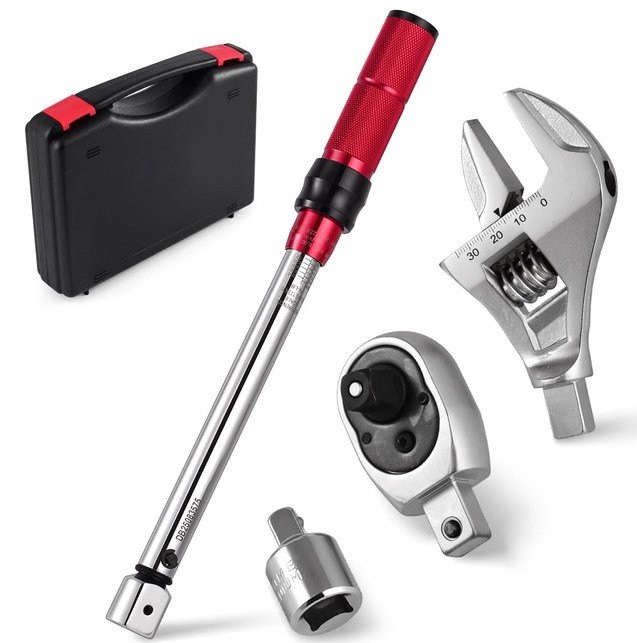
In my over ten years as a home improvement specialist and hands-on technician, I’ve seen that exact scenario play out countless times. Carrying a massive 50-piece fixed socket set isn’t always practical, especially when working in tight crawlspaces or emergency plumbing scenarios. Investing in a high-grade wrench set adjustable configuration gives you the mechanical leverage to handle virtually any fastener size, provided you know how to operate the tool correctly.
Let’s dive into the metallurgy, jaw physics, and step-by-step techniques required to turn this versatile hand tool into your greatest maintenance asset.
The Mechanical Physics of Adjustable Jaws: Why Force Direction Matters
Many DIYers treat an adjustable wrench like a symmetrical hammer, applying force in whichever direction feels most comfortable. That single mistake is why rounded bolt heads and stripped fasteners are so common in beginner projects.
An adjustable spanner consists of a fixed, rigid jaw integrated into the handle frame and a movable jaw driven by a worm gear (knurl).
Think of the tool like a human jaw joint. The fixed jaw acts like your skull—it can take massive structural force without moving. The movable jaw acts like your lower mandible—flexible and adaptable, but vulnerable to dislocation if hit from the wrong angle.
                      [ Pull Direction ] ===> (Torque Applied)
                                  ||
                                  \/
               +--------------------------------------+
               |            FIXED JAW                 |
               | (Takes Primary Stress / Solid Body)  |
               +--------------------------------------+
                             [ FASTENER ]
               +--------------------------------------+
               |           MOVABLE JAW                |
               | (Follows Pull Direction / Worm Gear) |
               +--------------------------------------+
When applying torque with a wrench set adjustable unit, you must always pull the handle toward the side with the movable jaw. This directs the rotational force back into the solid body of the fixed jaw, preventing the worm gear from spreading open under heavy pressure.
-
Primary Bearing Surface: The fixed jaw bears nearly 80% of the rotational torque load when pulled correctly.
-
Tolerance Play (Backlash): Minor movement in the worm gear is normal, but excessive play indicates low-quality machining or internal gear wear.
-
Flank Engagement: Always slide the fastener as deep into the throat of the jaws as possible to maximize surface contact and eliminate corner-rounding forces.
Selecting the Right Wrench Set Adjustable System
Not all adjustable tools belong in a serious technician’s bag. The difference between a budget store-bought tool and a professional-grade set comes down to alloy composition, jaw capacity, and head geometry.
| Tool Metric / Spec | Standard DIY Grade | Professional Tradesman Grade |
| Material Composition | Carbon Steel / Zinc Plated | Forged Chrome Vanadium (Cr-V) / Chrome Molybdenum |
| Jaw Capacity | Standard Opening Ratio | Extra-Wide Opening (Up to 30% larger capacity) |
| Head Profile | Thick, bulky jaw shoulders | Ultra-slim tapered jaws for narrow clearances |
| Measurement Scale | Laser-etched Metric / SAE markings | High-contrast dual-unit scales with zero-calibration |
1. Compact 6-Inch & 8-Inch Wide-Opening Sets
Modern tool engineering has produced short-handle wrenches with extra-wide jaw openings.
-
Best used for: Under-sink plumbing, tight automotive engine bays, and low-clearance appliance repair.
-
Key advantage: Allows high-torque leverage on large fittings ($1\text{ to }1.5\text{ inches}$) in restricted spatial envelopes where a long handle cannot swing.
2. Heavy-Duty 10-Inch & 12-Inch Structural Sets
These larger units feature longer beam handles that generate maximum mechanical advantage for stubborn or rusted fasteners.
-
Best used for: Main water lines, HVAC compressor brackets, outdoor gate hardware, and heavy machinery maintenance.
Step-by-Step Execution Protocol: Securing Clean Torque
To eliminate slipping, hand fatigue, and rounded bolt heads, follow this field-tested workflow every time you pick up your wrench set adjustable tools.
Step 1: Clean and Inspect the Fastener
Wipe away grease, rust flaking, and debris from the hex head. Slippage occurs most frequently when dirt prevents the wrench jaws from sitting flush against the flat faces of the bolt.
Step 2: Set the Initial Jaw Opening
Slide the wrench over the fastener head. Rotate the worm gear until the jaws clamp firmly against the parallel flat flanks of the bolt—never place the tool on the sharp points or corners!
Step 3: Snug the Fit and Verify Direction
Give the knurl one final tightening squeeze with your thumb to eliminate all internal backlash. Orient the tool so that your pulling motion forces the fixed jaw to follow the rotation, bearing the primary mechanical load.
[ Step 1: Inspect & Clean ]           [ Step 2: Flush Jaw Seating ]
  Remove oil & debris                   Clamp flats, not corners
+---------------------------+         +---------------------------+
| Ensure clean metal contact|  ====>  | Tighten knurl completely  |
| Check for rounded edges   |         | Eliminate jaw backlash    |
+---------------------------+         +---------------------------+
Pro Tips
Pro Tip: The Zero-Backlash Rubber Wrap
When working on delicate chrome plumbing fixtures (like designer bathroom faucets), metal jaws can scratch fine finishes. Wrap two layers of electrical tape or heavy rubber electrical insulating tape over the jaw teeth before clamping. The rubber fills the microscopic gap, provides superior grip, and prevents costly finish damage.
The Hammering Hazard
Never strike the handle of an adjustable wrench with a hammer or slip a steel cheater pipe over the beam to gain extra leverage! Unlike solid combination wrenches, an adjustable tool houses delicate internal worm gear teeth and pivot pins. Impact shock or excessive leverage will shear the gear threads instantly, rendering the tool completely useless.
Unlocking Unmatched Utility in Your Workshop
A high-performance wrench set adjustable setup isn’t a lazy replacement for traditional sockets—it’s an essential, highly engineered system built for speed, adaptability, and field efficiency. By respecting jaw orientation, selecting forged chrome-vanadium alloys, and keeping your gear teeth snugged tight against fastener flanks, you can tackle almost any mechanical challenge with absolute confidence.
What tools currently make up your go-to emergency maintenance kit? Have you ever run into a stripped bolt or a slipping jaw while working on a home project? Share your thoughts, setup photos, and questions in the comments below—I’d love to help you hone your mechanical technique!