You are in the middle of searing a pair of dry-aged ribeye steaks over high heat. The pan is smoking, the timer is ticking down, and you need ground cumin and garlic powder right now. You open a upper kitchen cabinet, knock over three glass jars, dig behind a container of baking powder, and spend 45 frustrating seconds hunting through a dark, chaotic abyss. By the time you find the jar, your garlic is burnt and your steak crust is ruined.
I have witnessed this exact kitchen tragedy play out in dozens of home remodels over my ten years as a residential contractor and spatial designer. Early in my career, during a full kitchen overhaul in suburban Illinois, I watched a passionate home chef struggle with a narrow, awkward 9-inch gap between her range and base cabinets. The builder had stuffed a filler panel there, wasting valuable real estate.
We retrofitted that awkward dead space with a custom, heavy-duty spice pull out organizer. The transformation was immediate—what was once a useless architectural gap turned into the most functional, high-efficiency prep zone in the entire kitchen.
Upgrading your cabinetry logistics with a dedicated slide-out mechanism isn’t just about organizing small jars; it is about reclaiming dead space, improving ergonomic workflow, and preserving the chemical potency of your culinary ingredients.
Spatial Kinematics: Why Slide-Out Mechanics Beat Wall Cabinets
To understand why a spice pull out system revolutionizes kitchen storage, you have to look at spatial accessibility and kinetic reach. Traditional upper wall cabinets require you to reach upward and look through layered rows of containers, hiding items behind one another.
Base cabinet pull-outs, by contrast, utilize full-extension slide mechanics that bring 100% of the stored inventory out into clear sight and easy reach.
[ Traditional Wall Cabinet ] ➔ [ Layered Jars ] ➔ [ Poor Visibility & Blind Spots ]
                                                            │
[ Full-Extension Pull Out ]  ➔ [ Vertical Tiering ] ➔ [ 100% Sightline & Ergonomic Access ]
Think of a slide-out organizer like a filing cabinet for your cooking ingredients. Instead of stacking files on top of each other in a deep box, you align them vertically on heavy-duty rails so every label faces outward.
-
Full-Extension Ball-Bearing Slides: Heavy-gauge steel slides extend completely past the face frame of the cabinet, ensuring no jar remains trapped in the dark back corner.
-
Vertical Tiering: Multi-tier adjustable shelf heights maximize vertical volume, allowing you to store tall vinegar cruets on the bottom tier and small spice tins on top.
-
Dynamic Load Capacities: Precision mechanical runners carry load weights between 75 lbs and 100 lbs without sagging or binding.
Hardware Specifications: Selecting the Right System for Your Build
Not all slide-out organizers are built equal. Selecting the proper spice pull out hardware requires matching runner mechanics, soft-close dampening, and material builds to your specific cabinet box construction.
| Feature / Spec | Undermount Soft-Close Slides | Side-Mount Ball-Bearing Slides | Door-Mounted Retrofit Kits |
| Weight Rating | High (75 lbs – 100 lbs) | Moderate (50 lbs – 75 lbs) | Light to Moderate (30 lbs – 50 lbs) |
| Extension Type | Over-Travel / Full Extension | Full Extension | Partial to Full Extension |
| Motion Technology | Concealed Hydraulic Soft-Close | Mechanical Friction / Soft-Close | Basic Gravity / Spring Latch |
| Space Efficiency | Maximum (Concealed below shelf) | Loses 1/2-inch side clearance | Relies on existing cabinet shelves |
| Best Application | High-end custom base cabinets | Budget-friendly base remodels | Existing wall cabinet upgrades |
1. Undermount vs. Side-Mount Slide Mechanics
-
Concealed Undermount Slides: The gold standard for modern cabinetry. The runners sit hidden beneath the wooden box, protecting mechanical bearings from spice dust and liquid spills while providing smooth, hydraulic soft-closing action.
-
Side-Mounted Ball-Bearing Slides: A cost-effective alternative for DIY retrofits. While durable, they expose steel bearings to ambient kitchen grease and take up roughly 1/2 inch of lateral storage width inside narrow cabinet openings.
2. Base Cabinets vs. Wall Cabinet Inserts
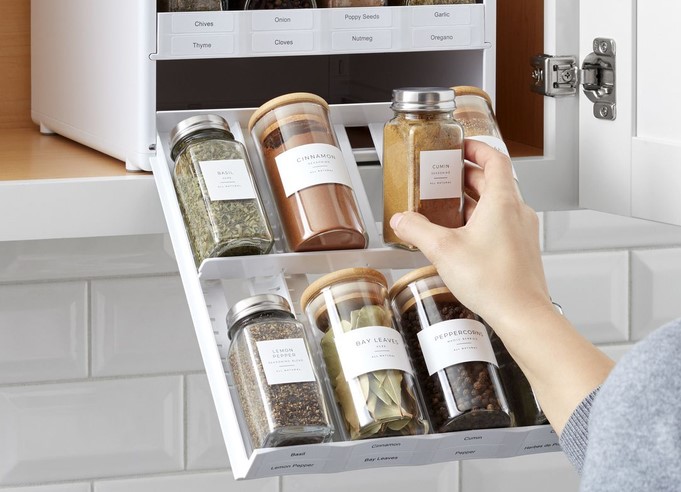
While 6-inch to 12-inch base cabinet pull-outs positioned next to the cooktop offer the most ergonomic workflow, upper wall cabinet drop-down pull-outs are excellent alternatives for homes with limited floor space.
Culinary Preservation: The Chemistry of Spice Storage
Beyond ergonomic access, installing a base-level spice pull out plays a massive role in preserving the essential oils and flavor profiles of dried herbs and spices.
Spices degrade rapidly when exposed to three environmental catalysts: direct light, heat, and moisture.
-
Heat Damage: Storing spice racks directly above a range hood exposes ground peppers, dried herbs, and aromatics to rising thermal currents, baking away volatile essential oils within weeks.
-
Light Degradation: Storing glass jars on open wall shelves or magnetic fridges exposes dried herbs to ultraviolet light, breaking down chlorophyll and aromatic compounds.
-
The Pull-Out Solution: A enclosed base cabinet slide-out keeps your entire collection in a cool, dark, temperature-stable environment right next to your prep zone, keeping spices potent up to 3x longer.
Step-by-Step Installation & Alignment Logistics
Installing a factory or aftermarket slide-out system is a straightforward weekend project if you follow precise measuring protocols.
-
Measure the Clear Opening: Measure the narrowest point of your cabinet opening (accounting for door hinges and face frames), not the interior box width.
-
Anchor the Base Runners: Secure the bottom slide assembly firmly to the floor of the cabinet box using hardwood screws, ensuring the tracks run perfectly parallel.
-
Attach Door Bracket Hardware: Use adjustable door-mounting brackets to connect the cabinet door face directly to the front frame of the pull-out unit.
-
Fine-Tune Micro-Adjustments: Use the integrated eccentric 3-way adjustment screws on the door brackets to align door gaps flush with surrounding cabinet doors.
Expert Advice: Pro Tips & Hidden Pitfalls
PRO TIP: The “Chrome Guard Rail” & Rubber Mat UpgradeFast movements when pulling out a heavily loaded slide-out can cause tall glass olive oil bottles to tip over and shatter. Choose a unit featuring adjustable height chrome guard rails or solid wood side walls, and line every wooden shelf tier with a washable, non-slip silicone mat. This prevents jar chatter and catches sticky drips before they stain raw hardwood interiors.
Hidden Pitfalls to Avoid:
-
Installing Too Close to Heavy Heat Sources: While placing your spice organizer near the stove is convenient, never mount it directly against an uninsulated oven sidewall. Ensure there is a standard cabinet side-wall barrier or air gap to prevent thermal transfer into your spice jars.
-
Ignoring Weight Distribution: Placing heavy cast-iron mortar-and-pestles or 1-gallon oil jugs on the top tier of a narrow pull-out raises its center of gravity, causing the mechanism to feel top-heavy and strain the slide bearings. Always store heavy liquids on the bottom tier and light spice tins on top.
-
Forgetting Face Frame Clearance: On face-frame cabinets, failing to account for the frame overhang will result in the slide-out crashing into the solid wood lip during extension. Always use rear-mounting sockets or spacer blocks to flush out side walls.
Reclaim Your Kitchen’s Functional Potential
A truly functional kitchen is built around seamless workflows and smart spatial logistics. Upgrading your prep zone with a high-performance spice pull out system eliminates daily cooking frustration, keeps your countertops clutter-free, and turns awkward cabinet gaps into high-value storage space.
Take a hard look at your current cooking prep zone tonight. Identify the dead space, unstack those hidden glass jars, and take control of your kitchen storage with confidence.
How do you currently organize your spice collection? Have you ever had to deal with chaotic wall cabinets during a cooking rush? Drop your stories, ideas, or questions in the comments below—let’s discuss smart kitchen design together!