
You step out of a warm, relaxing shower on a freezing winter morning, reach over to grab your towel, and are instantly hit with a musty, sour odor. You pull the heavy fabric to your face, only to realize it is still damp from yesterday’s shower, clinging to trapped moisture and bacteria.
I’ve fielded frantic calls from countless clients facing this exact frustration. Early in my career, during a full bathroom remodel for a family of five in Oregon, the homeowners complained that their freshly tiled bathroom constantly smelled like mildew despite daily cleaning.
When I inspected the space, the root cause wasn’t a plumbing leak or a failed exhaust fan—it was a single, flimsy plastic robe hook where three thick bath sheets were crumpled on top of one another.
We replaced that inadequate hook with a properly spaced, multi-bar towel rack, and the odor disappeared within 24 hours. Over my ten years in residential contracting and spatial planning, I have learned that wall-mounted utility hardware is not a decorative afterthought. Selecting and mounting a high-performance drying fixture is a fundamental moisture management practice that protects wall substrates, optimizes air circulation, and keeps your facility hygienic.
Thermal Physics & Drying Mechanics: Why Hooks Fail
To understand why a dedicated towel rack is vastly superior to single robe hooks or door pegs, you must look at thermodynamic evaporation. Heavy cotton bath sheets absorb up to three times their dry weight in water.
When tossed over a hook, the fabric bunches together, sealing moisture inside thick folds where ambient air cannot circulate.
[ Bunched Towel on Hook ] ➔ [ Sealed Moisture Folds ] ➔ [ Slow Evaporation & Bacterial Growth ]
                                                                   │
[ Flat Towel on Rack ]   ➔ [ Maximum Surface Area ]  ➔ [ Rapid Airflow & Complete Drying ]
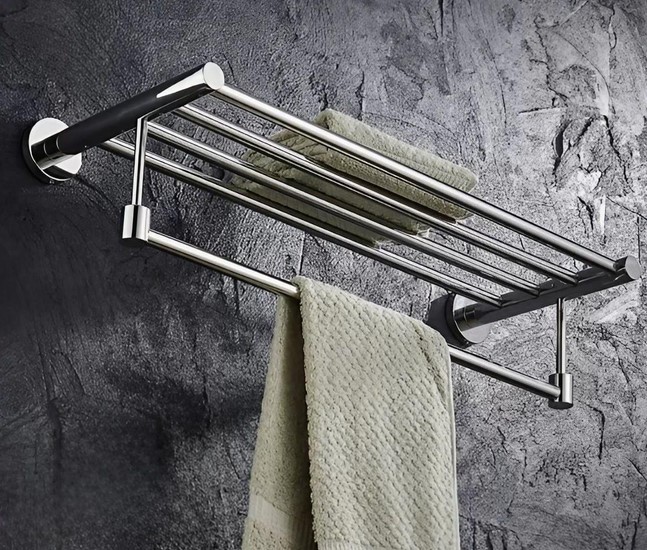
Think of a towel rack like a radiator grill for wet textiles. By extending the fabric flat across a horizontal plane, you maximize its surface-area-to-mass ratio, allowing ambient room air and convective thermal currents to evaporate trapped water rapidly.
-
Convective Evaporation: Spreading fabric flat exposes both the front and back weave to ambient airflow, accelerating drying time by up to 400% compared to bunched hooks.
-
Bacterial Suppression: Rapid moisture dissipation prevents Staphylococcus and mold spores from colonizing wet cellulose fibers, eliminating sour odors at the source.
-
Fabric Preservation: Hanging heavy, wet towels from a single point stretches yarn fibers out of shape, whereas a horizontal bar distributes weight evenly across the entire weave width.
Hardware Specifications: Matching Materials to High-Humidity Zones
Bathrooms and commercial washrooms present harsh environmental conditions. Selecting the right towel rack requires matching metal alloys, finishes, and structural configurations to your room’s relative humidity ($RH$) levels.
| Material / Finish Spec | Corrosion Resistance | Tensile / Weight Capacity | Maintenance Complexity | Best Facility Application |
| 304-Grade Stainless Steel | Outstanding (Resists rust & pitting) | High (Up to 50 lbs securely anchored) | Very Low (Wipe down clean) | High-humidity master baths & steam rooms |
| Solid Forged Brass | Exceptional (Immune to corrosion) | Very High (Heavy-duty durability) | Low to Moderate | High-end residential & commercial spaces |
| Electroplated Aluminum | Moderate to High | Light to Moderate | Very Low | Budget guest baths & powder rooms |
| Coated Mild Steel | Low (Prone to chipping & rust) | Moderate | High (Requires sealing) | Dry storage zones only |
1. Single Bars vs. Multi-Tiered Ladder Racks
-
Single Straight Bars: Ideal for primary drying zones near shower enclosures. Keep a minimum 2-inch wall clearance gap behind the bar to ensure airflow behind the damp fabric.
-
Hotel-Style Train Racks (Shelf + Bar): The ultimate space saver for small bathrooms. The upper rack stores folded clean towels, while the lower bar dries active bath sheets.
Architectural Installation Logistics: Anchoring for Heavy Structural Loads
The single biggest installation mistake beginners make is relying on hollow drywall anchors included in cheap retail hardware kits. A wet bath sheet adds significant weight, and repeated pulling quickly rips plastic expansion plugs right out of $1/2$-inch drywall.
-
Locate Solid Wood Studs: Always aim to anchor at least one side of your towel rack mounting bracket directly into a vertical wood stud using heavy-duty 2-inch stainless steel wood screws.
-
Toggle Bolts for Hollow Drywall: If stud placement doesn’t match your fixture’s width, toss out plastic expansion anchors and use metal toggle bolts (snap-toggles). Toggle bolts flip open behind the drywall, spreading mechanical pull force over a large surface area.
-
Standard Ergonomic Mounting Height: Mount primary towel bars between 42 inches and 48 inches above the finished floor line. For hotel-style upper shelf racks, set the height between 60 inches and 66 inches.
Expert Advice: Pro Tips & Hidden Pitfalls
PRO TIP: The “Heated Rail” Energy Efficiency TrickIf you live in a cold or humid climate, consider upgrading to a hardwired heated towel rack. Powered by low-wattage heating elements (typically consuming just 60W to 150W—less than a standard light bulb), these units keep towels warm, speed up drying times in damp basements, and double as efficient space heaters that reduce ambient room moisture.
Hidden Pitfalls to Avoid:
-
Mounting Too Close to Tile Baseboards or Trim: Always leave at least 12 inches of vertical clearance below the lower bar of your rack. Hanging a 54-inch bath sheet on a low-mounted bar causes the wet fringe to drag across the floor, picking up dust and bathroom grime.
-
Ignoring Electrical Safety Zones: Never install a metal towel rack within arm’s reach inside an open shower enclosure or directly over a bathtub rim unless it is specifically rated for wet-zone exposure and GFCI-protected.
-
Over-Tightening Mounting Set Screws: Most modern brackets use tiny Allen hex set screws to lock the decorative bar face to the wall plate. Over-tightening these screws strips the soft metal threads, leaving you with a loose, wobbly bar that sags under load.
Upgrade Your Facility’s Efficiency Today
Streamlining your home’s utility hardware isn’t just about making your bathroom look pretty for guests. By making an informed choice about material selection, airflow clearance, and rock-solid wall mounting, a quality towel rack turns an everyday nuisance into a clean, hygienic, and highly functional asset.
Take a walk into your bathroom today and inspect your towel fixtures. Stop settling for damp, sour-smelling towels, and give your home the structural organization it deserves.
How do you currently handle towel drying and storage in your home? Have you ever had a towel bar pull clean out of the wall? Drop your stories, questions, or installation tips in the comments below—let’s discuss utility optimization together!