
I was standing on the edge of a wobbly dining chair two years ago, balancing on my tiptoes while trying to reach a Dutch oven on the top shelf of a newly installed 42-inch upper cabinet. Just as my fingers grazed the heavy cast iron, the chair leg creaked, shift two inches to the left, and sent my heart straight into my throat.
It was a classic homeowner mistake, and as someone who has designed, built, and renovated residential kitchens for over a decade, I felt pretty foolish. According to emergency room statistics, falling off improvised standing surfaces like dining chairs, overturned buckets, or counter edges accounts for tens of thousands of home injuries every single year.
We spend fortunes on quartz countertops, custom millwork, and smart appliances, yet we routinely neglect the simplest mechanical link in our daily workflow: vertical reach. Integrating a dedicated, high-stability kitchen step stool into your home isn’t just about reaching the top shelf; it is an essential piece of functional access engineering that maximizes every cubic inch of your storage footprint.
The Spatial Ergonomics of Vertical Storage
In modern residential architecture, ceiling heights have expanded from the standard 8-foot limit to 9 or 10 feet. To maximize storage density without expanding a kitchen’s footprint, cabinet makers build tall vertical wall runs that extend all the way to the ceiling soffit.
While this creates massive amounts of usable volume, it introduces an ergonomic boundary. The average adult standing reach sits between 80 and 84 inches. Anything stored above that height falls into what ergonomists call “dead storage”—zones that are physically impossible to access without elevated assist equipment.
A well-engineered kitchen step stool effectively expands your functional reach zone by 9 to 18 inches. Think of it as a personal vertical elevator for your workspace. Instead of leaving 30% of your upper cabinetry empty or filling it with items you will never touch again, you bring that entire upper tier back into daily rotation.
Technical Hardware Mechanics: Selecting a Stable Platform
Not all step stools belong in a busy kitchen environment. A lightweight plastic toddler stool might seem convenient, but under adult weight or dynamic loads, it can easily flex, crack, or tip over. When evaluating a kitchen step stool for daily adult utility and long-term durability, you must look closely at three core technical specifications:
+-----------------------------------------------------------------------+
|                 KITCHEN STEP STOOL HARDWARE MATRIX                    |
+-----------------------------------------------------------------------+
| Material Class        | Working Load Limit | Duty Rating (ANSI) | Caster / Foot Mechanism |
+-----------------------+--------------------+--------------------+-------------------------+
| Hardwood (Oak/Beech)  | 250 - 300 lbs      | Type II (Medium)   | Fixed Rubber Pads       |
| Aircraft Aluminum     | 300 - 375 lbs      | Type IA (Extra Heavy)| Retractable Spring-Loaded|
| Tubular Steel Frame   | 225 - 250 lbs      | Type II (Medium)   | Molded TPR Caps         |
+-----------------------------------------------------------------------+
1. ANSI Duty Ratings and Working Load Limits
Always look for a platform compliant with ANSI A14.2 (Aluminum) or ANSI A14.5 (Wood/Fiberglass) safety standards. Look for a Type I (250 lbs) or Type IA (300 lbs) working load rating. Remember: your weight plus a heavy 15-pound appliance or stockpot combined equals the total dynamic load placed on the step surface.
2. Base Footprint and Tread Surface Geometry
A stable stool relies on a wide base-to-height ratio to prevent tipping when leaning out to grab an item. Look for treads that feature an anti-slip rubberized texture, deep knurling, or recessed grip grooves. The top platform step should measure at least 12 by 15 inches to allow your entire foot to sit flat, reducing calf strain and improving balance.
3. Caster Systems: Lock vs. Retract Mechanics
Library-style rolling kick-stools feature spring-loaded casters that retract instantly under your weight, dropping the solid base onto the floor. If you prefer a mobile stool, ensure the retraction springs have a heavy tension curve so the wheels lock firmly the instant your foot meets the bottom step.
Strategic Integration: Storage Protocols and Hidden Placement
The biggest reason homeowners end up standing on precarious chairs is simple: their step stool is tucked away in a dusty garage or jammed behind a basement door. If an access tool isn’t within three steps of where you need it, you won’t use it.
+-------------------------------------------------------------------+
|               FUNCTIONAL ACCESS PLACEMENT PROTOCOL                |
+-------------------------------------------------------------------+
| 1. Spec a 6-inch vertical pull-out slot near the main cabinet run |
| 2. Choose a folding aluminum model under 2.5 inches folded profile|
| 3. Position the stool outside primary foot-traffic pathways       |
| 4. Pair upper cabinet storage with lightweight, handles-on bins   |
+-------------------------------------------------------------------+
Integrated Cabinet Slots
When I design custom kitchens, I always try to include a narrow, 6-inch vertical pull-out cabinet gap right next to the refrigerator or pantry. Storing a slim-profile, folding kitchen step stool inside this dedicated slot keeps it completely hidden from view while keeping it immediately accessible.
Ultra-Slim Folding Profile
If you are working with an existing kitchen layout without custom cabinetry modifications, choose an ultra-thin folding aluminum or heavy-duty resin model. Modern engineering allows high-capacity aluminum stools to fold down to a flat profile under 2 inches, allowing them to slide effortlessly into the narrow gap between your lower cabinets and the refrigerator.
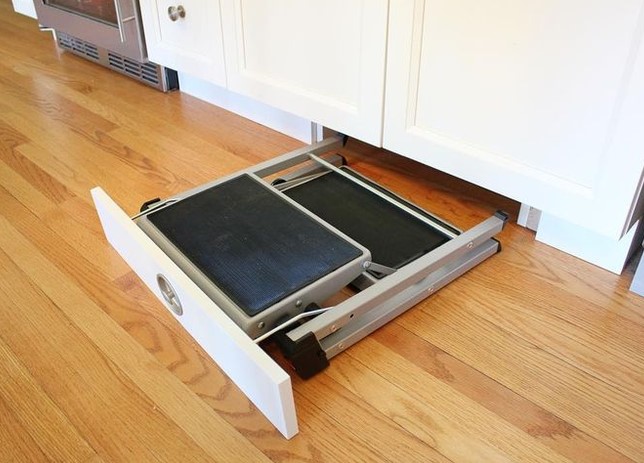
Hidden Warning: The Toe-Kick Clearance TrapNever store a non-folding step stool loose in front of your base cabinets. Standard kitchen toe-kicks recessed 3 inches deep are meant to allow human feet to move freely while working at the counter. Leaving a stool parked in front of base cabinets creates a trip hazard and compromises your natural stance at the countertop.
Safety Engineering: Preventing Kitchen Slip and Fall Accidents
Kitchens are high-risk zones for slip-and-fall accidents due to smooth hardwood or tile flooring, occasional liquid spills, and dynamic human movement. Using a kitchen step stool correctly requires adhering to basic safety protocols:
-
Surface Inspection: Never place a step stool directly over wet tile, freshly mopped linoleum, or loose throw rugs. The friction coefficient between the stool’s rubber feet and the floor must be absolute to prevent lateral sliding.
-
Three-Point Contact Rule: When stepping up or retrieving heavy cookware from an overhead cabinet, maintain three points of physical contact (two feet on the tread, one hand bracing against the cabinet frame) until your posture is completely stable.
-
Weight Centering: Always center your hips between the side rails of the step stool. Reaching too far to the left or right shifts your center of gravity outside the base footprint, which can cause the platform to tip sideways.
Pro Tip: The Drawer Step Convertible HackFor homes with young children or shorter adult users who need frequent access to main prep surfaces, consider installing a toe-kick step drawer. This specialized hardware converts a standard bottom cabinet toe-kick space into a heavy-duty, pull-out step that supports up to 300 pounds, hiding completely flat beneath the lower cabinet doors when not in use.
Final Thoughts: Upgrade Your Kitchen’s Vertical Utility
A high-quality kitchen step stool is far more than a simple piece of plastic or wood—it is a critical tool that bridges the gap between architectural space and human ergonomics. By selecting a platform with robust hardware ratings, storing it in an accessible location, and following proper safety steps, you unlock the full storage potential of your home without risking a dangerous fall.
Stop risking your safety on dining chairs or counter edges just to grab that once-a-year serving platter!
How do you currently reach the high shelves in your kitchen? Have you built a custom storage gap for your stool or installed a hidden toe-kick drawer?
Share your setups, favorite hardware picks, or questions in the comments below—I’d love to help you build a safer, more efficient kitchen!