
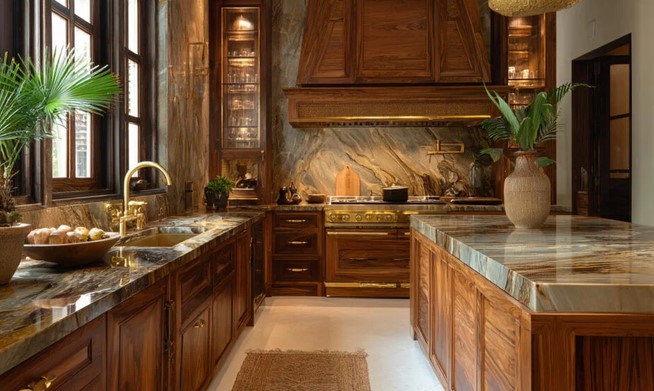
“It’s going to feel like a cave, isn’t it?” That was the exact phrase a client named Marcus blurted out six years ago as we unrolled the blueprints for his custom kitchen overhaul. He was staring at my finish samples—specifically a deep, moody charcoal stained oak panel—and panicking that departing from the standard all-white kitchen trend would ruin his home’s value.
Fast forward eight weeks: Marcus stood under his dimmable ambient pendant lights, holding a glass of wine, staring at the finished space in awe. The transformation was nothing short of dramatic. The deep tones didn’t make the space shrink; instead, they pushed the back walls visually outward, creating an anchor of sophisticated luxury that transformed his entire floor plan into a boutique-hotel experience.
In my more than ten years of designing custom cabinetry, renovating luxury kitchens, and managing residential interior builds, I have seen design trends come and go. While clinical sterile-white kitchens dominated the previous decade, today’s high-end interior landscape belongs to bold, grounded spaces. Choosing dark cabinets is no longer a risky design gamble—it is the ultimate statement in modern interior branding.
The Visual Mechanics: Why Dark Cabinets Ground a Room
To understand why deep tones feel so luxurious, think of interior architecture like high-end men’s tailoring. An all-white suite might feel breezy, but a perfectly fitted, dark charcoal or midnight-navy bespoke tuxedo commands instant respect and presence in any room.
Dark cabinets act as the visual anchor of an open-concept living area. In human perception, heavy visual weight belongs at the base of a space to provide a sense of stability and permanence. When you specify rich espresso, matte black, or deep forest green cabinetry, you create an intentional focal point that forces the eye to pause and appreciate the surrounding architectural details.
Furthermore, deep cabinet colors act as a high-contrast canvas for surrounding elements. They make metallic hardware pop, highlight subtle veining in natural stone countertops, and elevate everyday appliances into integrated pieces of architectural art.
Technical Color Theory: Mastering Undertones and LRV
Achieving a high-end look with dark cabinets isn’t as simple as picking a black paint swatch at the hardware store. As a field expert, I always guide clients through two critical technical metrics before making a final selection: Undertones and Light Reflectance Value (LRV).
+--------------------------------------------------------------------+
|               DARK CABINET FINISH SELECTION MATRIX                 |
+--------------------------------------------------------------------+
| Color Tone         | Primary Undertones   | Best Natural Match     |
+--------------------------------------------------------------------+
| Matte Pitch Black  | Neutral / Charcoal   | Calacatta Marble/Gold  |
| Deep Espresso      | Warm Chocolate/Red   | Polished Nickel/Cream  |
| Midnight Navy      | Cool Slate/Cobalt    | Brushed Brass/Wood     |
| Smoked Walnut      | Organic Ash/Brown    | Quartzite/Matte Bronze |
+--------------------------------------------------------------------+
1. Understanding Light Reflectance Value (LRV)
LRV measures the percentage of light a paint color reflects on a scale from 0 (absolute black) to 100 (pure white). For a luxurious cabinet look that retains depth without absorbing every photon in the room, target an LRV between 8 and 15. This range yields a dramatic finish while allowing surface texture and grain to remain visible under artificial lighting.
2. Navigating Thermal Undertones
-
Cool Undertones (Slate, Charcoal, Navy): These tones reflect blue or gray hues under natural daylight. They work exceptionally well in modern, ultra-minimalist homes with floor-to-ceiling windows and cool-spectrum LED fixtures.
-
Warm Undertones (Espresso, Dark Walnut, Roasted Oak): These woods carry undertones of red, yellow, or rich cocoa. They infuse warmth into rustic-modern, traditional, or transitional spaces, preventing deep colors from feeling sterile.
Strategic Pairings: Countertops, Hardware, and Lighting Dynamics
A common mistake I see homeowners make is treating cabinetry as an isolated purchase. High-end interior design relies on a harmonic balance between three key supporting elements:
+-------------------------------------------------------------------+
|               LUXURY DESIGN CONTRAST PROTOCOL                     |
+-------------------------------------------------------------------+
| 1. Pair dark millwork with high-contrast, veined stone tops      |
| 2. Spec warm metallic hardware (Brushed Brass / Champagne Bronze) |
| 3. Layer warm LED task lighting (2700K - 3000K color temp)       |
| 4. Break up vertical mass with open shelving or glass fronts      |
+-------------------------------------------------------------------+
High-Contrast Stone Countertops
To keep dark cabinetry from swallowing the room, pair your millwork with high-contrast surfaces. White quartz, Calacatta marble, or dramatically veined quartzite countertops bounce light horizontal across the work plane, balancing the deep vertical surfaces of the cabinets.
Metallic Hardware Selection
Hardware serves as the jewelry of your millwork. Unlacquered brass, brushed bronze, or warm copper hardware provide an incredible contrast against dark cabinets. The warm metallic sheen cuts through deep paint or stain tones, giving the entire kitchen an artisanal, hand-crafted feel.
Color Temperature Lighting Strategy
Lighting can make or break dark surfaces. Avoid cool-white bulbs (4000K or higher), which make dark paint look chalky and washed out. Instead, specify warm 2700K to 3000K dimmable LED strip lights under upper cabinets and inside glass display boxes to cast a warm glow across your finishes.
Hidden Warning: The Dust & Fingerprint TrapFlat matte black paint finishes look incredible in magazine photo shoots, but in daily practice, they are maintenance nightmares. Flat matte finishes absorb oil from your fingertips, leaving greasy smudges that are difficult to clean. Always opt for a Satin or Velvet Sheen topcoat with an anti-fingerprint additive to ensure your cabinetry remains spotless.
Substrate and Finish Selection: Built for Durability
If you are investing in custom dark millwork, the underlying construction materials are just as important as the topcoat color. Dark finishes show imperfections, wood movement, and poor sanding far more clearly than light colors.
-
Species Selection: If you prefer stained wood over painted surfaces, choose open-grain hardwoods like White Oak or Ash. Staining oak dark creates a stunning two-tone effect where the natural wood grain peeks through the deep pigment, adding tactile texture to your space.
-
Coating Architecture: Demand a 2K Polyurethane (Two-Component) finish from your cabinetmaker or finishing shop. Unlike standard lacquer, 2K polyurethane forms a chemical cross-link bond that resists moisture, chemical spills, and impact chips far better over a ten-year span.
Pro Tip: The Two-Tone “Tuxedo” CompromiseIf you are still hesitant about committing to an all-dark kitchen, execute the “Tuxedo Layout.” Install your dark cabinets on the base runs and kitchen island where heavy foot traffic occurs, while painting upper cabinets a soft warm off-white or installing open floating wood shelves above eye level.
Final Thoughts: Redefining Your Living Space
Dark cabinetry is more than just a passing visual trend; it is a timeless design language that communicates luxury, confidence, and architectural depth. By understanding color undertones, pairing deep finishes with warm lighting, and selecting durable topcoats, you can transform your kitchen or bath into a high-end sanctuary that feels both cozy and grand.
Are you currently planning a kitchen renovation, or are you torn between an all-white space and bold dark cabinets? Have you tackled a dark wood stain project yourself?
Share your questions, ideas, or project photos in the comments below—I’d love to help you design your dream space!